Who Decides the Next UN Secretary-General? Can a Woman Break More Than 80 Years of History?
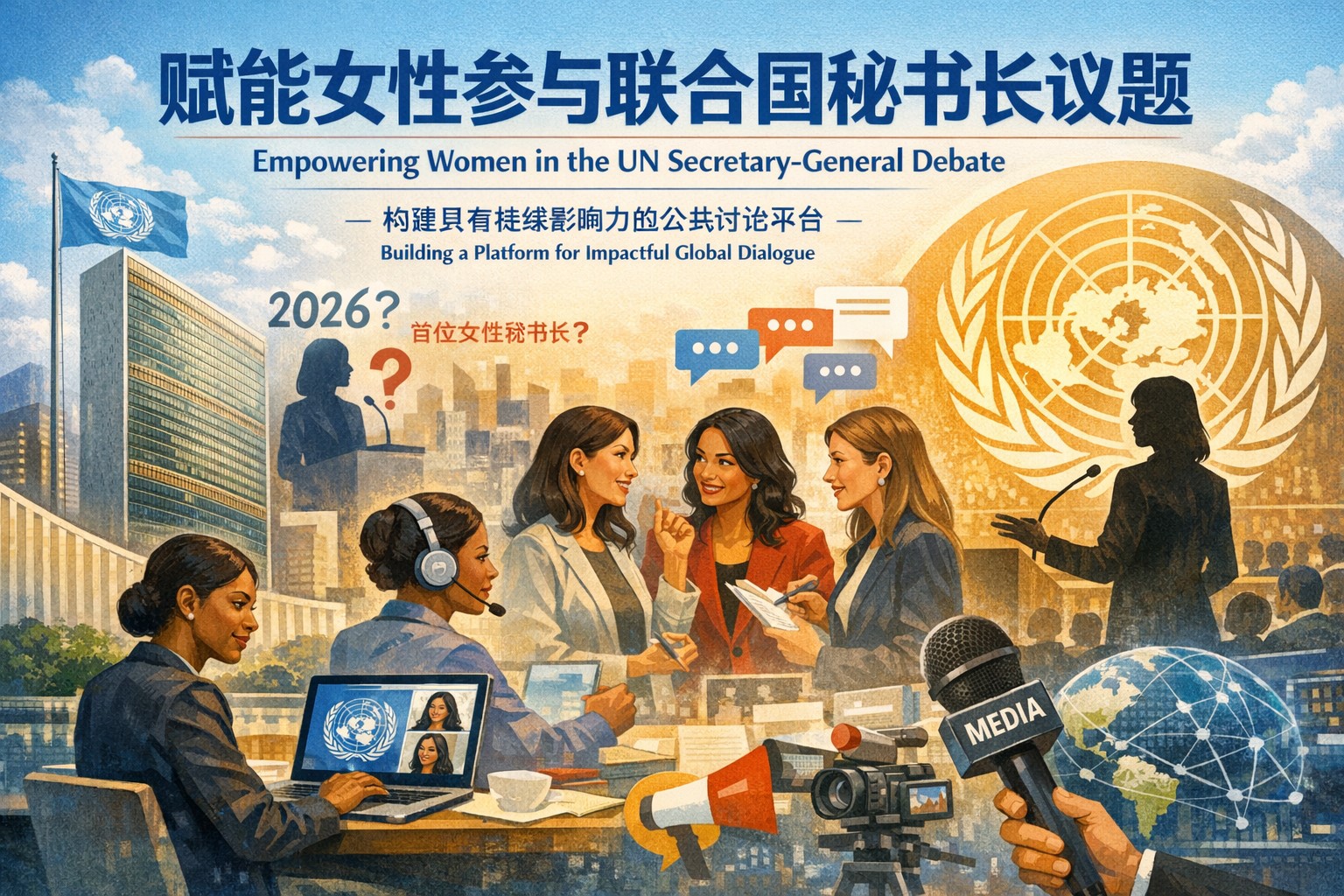
As the process to choose the next United Nations Secretary-General for the term beginning in 2027 moves forward, one question is again in focus: who decides the appointment, and can a woman finally break a historical gap that has lasted more than 80 years?
Celebrity Media | United Nations | November 9, 2026
As the selection of the next UN Secretary-General continues, who will become the Organization’s tenth Secretary-General has become a major international topic. At the same time, a question that has persisted for more than eight decades is receiving renewed attention: why, since the United Nations was founded, has there never been a woman Secretary-General?
When discussing candidates and their political backgrounds, a basic fact must be clarified: the Secretary-General is not decided by the United States, China, or any other single country. The office is filled through a Charter procedure in which the Security Council recommends a candidate and the General Assembly makes the appointment.
I. Fifteen Security Council members take part; the permanent five hold a special veto
Under Article 97 of the Charter of the United Nations, the Secretary-General is appointed by the General Assembly upon the recommendation of the Security Council.
The Security Council has 15 members: five permanent members—China, the United States, the Russian Federation, the United Kingdom and France—and ten non-permanent members.
In the recommendation process, a candidate needs the affirmative votes of at least nine Council members and must not be vetoed by any permanent member.
That means the five permanent members do hold special and significant influence, but they cannot appoint the Secretary-General alone. The ten non-permanent members are not bystanders either; their votes are an essential part of forming a recommendation.
Describing the choice of Secretary-General as simply a political decision between China and the United States therefore fits neither the UN’s institutional design nor the real role of the other Council members.
II. The General Assembly’s 193 Member States also matter
The Security Council recommends; final appointment rests with the General Assembly.
The General Assembly currently has 193 Member States and is the UN’s most universally representative decision-making body.
Member States cannot bypass the Council and appoint a Secretary-General on their own. They can, however, shape a candidate’s international support through diplomacy, regional coordination, public initiatives and political expression.
The selection is therefore not a closed affair among five major powers, but an international political process involving the membership as a whole.
For organizations that hope to see a woman serve as Secretary-General, this point is especially important. Building support for women candidates should not focus only on a few major powers; broader consensus is needed across regions, levels of development and political positions.
III. Why has there been no woman UN Secretary-General for more than 80 years?
Since the United Nations was founded in 1945, the post of Secretary-General has been held only by men.
That history reflects more than individual résumés. It also reflects international power structures, traditional diplomatic systems, geopolitical competition, and the under-representation of women in international decision-making bodies.
The UN has long advocated gender equality, women’s empowerment and women’s participation in global governance. Yet it has still not achieved the historic breakthrough of a woman in its highest administrative office.
This raises a question the international community should take seriously:
If the United Nations continually champions equality and inclusion, should the office of Secretary-General—with its global symbolism and real leadership authority—also offer women a fairer chance to compete?
A woman Secretary-General should not be about numerical balance alone. It should also reflect the value the international community places on diversity of leadership talent, representation and fair competition.
IV. Advancing a woman Secretary-General requires broader consensus among 193 Member States
Institutionally, whether a woman candidate can ultimately be chosen depends on the Security Council’s recommendation and the General Assembly’s appointment.
Politically, it requires understanding and support from different countries and regional groups.
The positions of the five permanent members matter greatly, but the choices of the ten non-permanent members cannot be ignored. Public positions, diplomatic coordination and international opinion among the 193 Member States can also create a more favorable political environment for women candidates.
Pushing for the first woman UN Secretary-General should therefore not be understood as the unilateral demand of one country, region or political grouping. It should be a global initiative for gender equality and international governance.
V. A historic breakthrough needs joint effort by the international community
The Secretary-General is not only the chief administrative officer of the UN system, but also an important diplomatic coordinator and a representative figure in global public affairs.
Amid complex challenges—conflict, climate change, economic development, artificial-intelligence governance and international cooperation—the United Nations needs broader representation and inclusion.
Giving women a chance to serve as Secretary-General does not lower the bar for leadership, nor does it pre-select any candidate. It means that, on the basis of equal qualifications and fair competition, women obtain the opportunity they are due.
That no woman has held the office in more than 80 years since the UN’s founding is a historical gap worth changing.
Whether 2027 can bring the first woman Secretary-General in UN history will be not only a personnel appointment, but also an important test of the international community’s commitment to gender equality.
Women’s participation in the highest level of global governance is not only a cause for women; it is a shared responsibility of the entire international community.
(Celebrity Media commentary.)